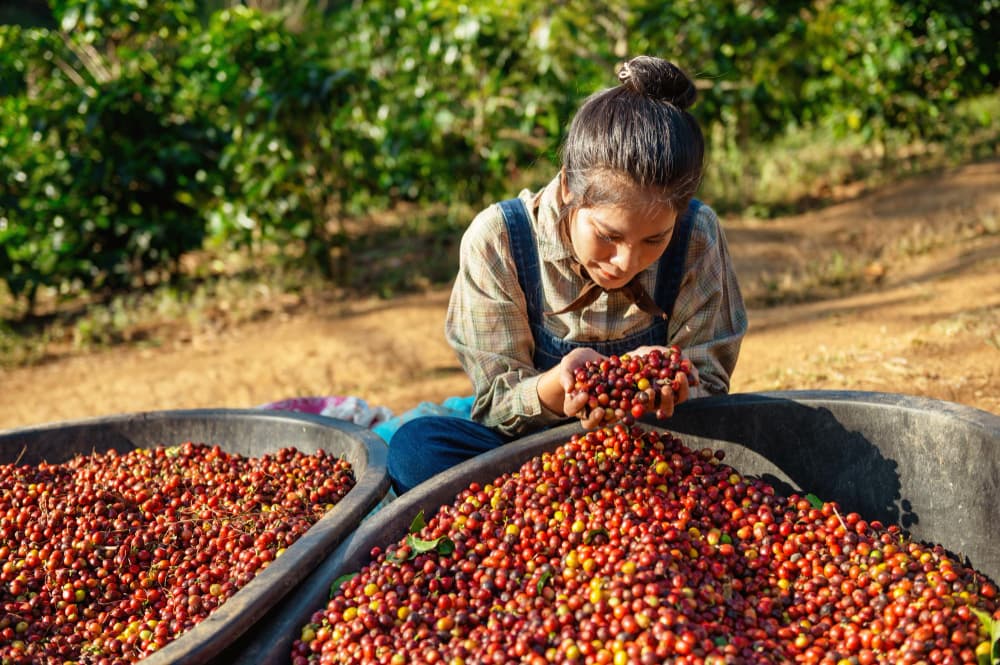
Doña Maria has been sorting cherries by hand for forty-two years. She does it the way her grandmother taught her — with both palms, eyes half-closed, feeling for the ones that give too easily. Underripe and they're put aside for the second pass. Overripe, the chickens get them. What's left is what makes it onto the drying patio.
This is the part of specialty coffee no one photographs. There are no espresso machines and no chalkboard menus. Just a woman, two buckets, and the patience to do the same motion six thousand times a day.
What the C-market doesn't see
The commodity price for green coffee in April was $2.16/lb. If Maria had sold through her cooperative at that price — minus the cooperative's 12% margin, the buying agent's cut, the mill's processing fee, and the exporter's commission — she'd have netted about 80 cents per pound. For coffee she spent six months growing, picking, fermenting, and drying.
That's the chain we're trying to break. We pay her a price tied to her cup score, not to whatever Brazil's harvest forecast happens to be that week. Her PCF lot scored 86 this year. That's a different conversation about money.
"I don't grow coffee for the market. I grow it for the people who will drink it."
Why hand-sorting still matters
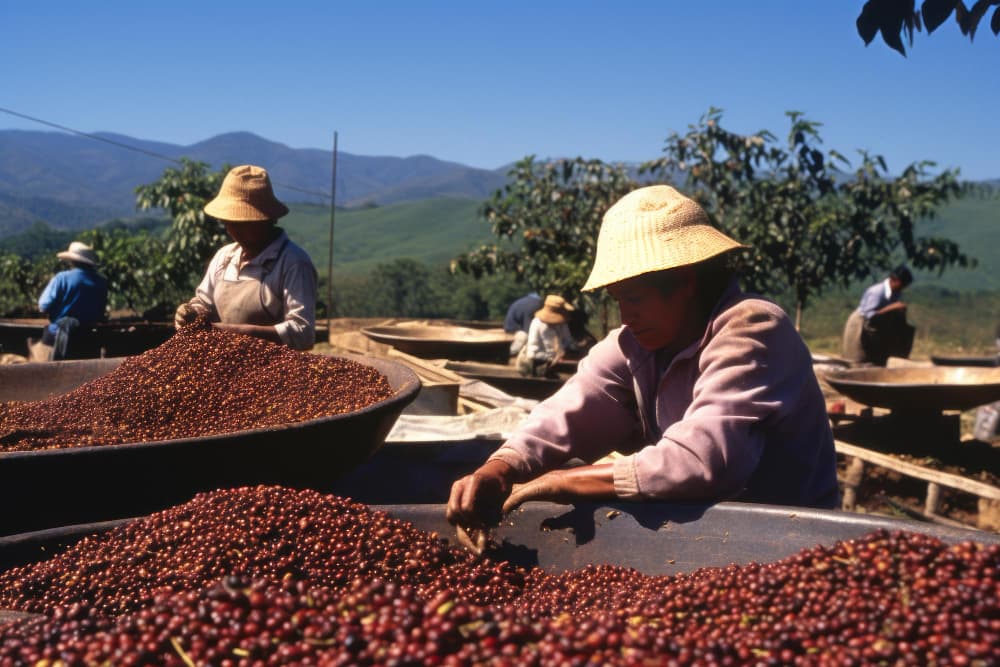
Modern processing stations have optical sorters that can pick out a green cherry from a red one at thirty per second. They're impressive machines. They also can't tell the difference between a cherry that's perfectly ripe and one that's been on the branch a day too long. Maria can. So can her two daughters, who have been doing this since they were old enough to reach the table.
Every lot we ship is hand-sorted at least twice — once at harvest, once after drying. It's the slowest part of our process and the most expensive. It's also the part you can taste.